
The ThresholdMark journal · Personalization
What to Write on Your House Nameplate: Family Names, House Names & Layout Ideas
Find a clear layout for family names, house names and flat numbers, with bilingual considerations and a final spelling checklist.

In this guide
The most difficult part of a personalized nameplate is often deciding what to put on it. A family surname is concise, individual names feel personal, and a house name can carry a story. Add a flat number, a regional script and a favourite symbol, and a small plate quickly becomes crowded.
Begin with the job the plate needs to do: help someone recognise the correct home. Then decide what you want it to express. The examples below use fictional names and addresses to show how those two aims can share a simple, readable layout.
The starting point
Choose one main line, make the house number easy to find and give every additional line a reason to be there. Review the final spelling in the actual design, not only in the text fields.
Choose the information that should lead
Ask what a visitor is most likely to know when they arrive. In a numbered apartment corridor, the flat number may be the quickest identifier. At a named villa, the house name may lead. For a family home with no separate house name, a surname or two personal names may be enough.
Visual priority does not mean every other line must become tiny. The largest line should be easy to identify, while the supporting text remains readable from the intended approach. If your chosen wording requires several very small lines, simplify it or choose a larger format before settling on the design.
- Main line: the family name, individual names or house name.
- Address cue: the house, plot or flat number, including any necessary block letter.
- Optional line: one useful or meaningful detail that still leaves breathing room.
Family names: concise and easy to recognise
A surname gives the plate a clear focus and can work well when several people share the home. The precise wording is a family choice: Sharma Family has a different tone from The Sharmas, while the surname alone is the most compact option.
For a simple English plural such as The Sharmas, an apostrophe is not needed. Other surnames have different plural forms, and some families prefer not to pluralise their name at all. If the wording feels awkward, Family or a surname-only layout avoids forcing a construction you do not like.
THE SHARMAS
204
Family-first
A short surname and a separate number create a clear two-line composition.
Illustrative text layout
RAO FAMILY
B-1204
A neutral alternative
Keep the block letter when it distinguishes your flat from another with the same number.
Illustrative text layout
MENON
18
Surname only
A concise option when the plate or the available wall space is small.
Illustrative text layout
Individual names: make room for everyone
Two individual names can make a plate feel welcoming without assuming a shared surname. Decide together whether to use first names, full names or a mixture that each person is comfortable displaying. Give the names comparable visual weight when neither should take priority.
An ampersand can save space, but it should suit the typeface and remain legible. If two full names are long, place them on separate lines rather than compressing the letters. For a shared home with more occupants, consider a house name or another agreed collective wording if listing everyone makes the plate difficult to read.
ANANYA & ROHAN
302
Two first names
A compact, personal layout with the address cue kept separate.
Illustrative text layout
ANANYA RAO
ROHAN MEHTA
302
Two full names
Separate lines preserve the full names without squeezing them into a narrow space.
Illustrative text layout
House names: give the story a clear place
A house name may refer to a family memory, a place, a tree or a word the household finds meaningful. It can lead the design even when the surname is included below it. Before choosing a word from a language you do not read confidently, confirm the meaning and spelling with someone who does.
Names such as Palm House, Courtyard House or Anugraha can create different impressions, but none needs to dictate the whole visual style. Try the exact wording in the chosen layout. A long house name may need a wider plate, fewer ornaments or a different line break to stay balanced.
If your building already has a registered or commonly used name, distinguish it from a personal house name. For deliveries and visitors, the official flat or plot number should remain easy to find. An attractive name is an addition to a useful address cue, not a substitute for one.
PALM HOUSE
The Raos
16
House name first
The house name leads, with a smaller family line and a distinct number.
Illustrative text layout
ANUGRAHA
16
A simpler version
Two lines can be enough when the house name already says what you want to express.
Illustrative text layout
Bilingual and regional-language lettering
A regional script can make the entrance more personal and help people who read that language. For a bilingual plate, decide whether both lines repeat the same name or whether one carries the house name and the other the family name. Avoid accidental repetition that adds length without helping the reader.
Different scripts occupy space differently, so equal font sizes do not necessarily produce equal visual weight. Use a layout that supports the required script and inspect its line spacing, joined characters and vowel signs. Do not rely on an automatic transliteration as the final spelling check.
ThresholdMark's catalogue includes English–Kannada design options. For any particular script, wording or font, confirm that the selected design and production process support the characters you need. Ask a fluent reader to review the final proof at a useful size before you approve it.
How to handle a long name without tiny letters
First remove optional words that do not help identify the home. Next try a line break at a natural boundary, keeping the name intact. Then compare a wider layout or a larger plate. Reducing the lettering should be a considered adjustment, not the automatic answer to every fitting problem.
Avoid manually inserting spaces between letters to imitate professional spacing. That can produce uneven results and may interfere with how a script is shaped. Use the supported design controls and review the rendered result. If the wording still feels crowded, ask about a more suitable layout rather than approving a compromise you cannot comfortably read.
A spelling preview on a large monitor can hide a size problem. Check the intended physical dimensions and view the design at approximately that size as well.
Keep exterior information intentional
A nameplate is visible to people beyond your invited guests. You usually do not need to include a phone number, email address or other contact details to identify a home. Decide as a household how much of each person's name you want displayed, especially when a short family or house name would do the job.
For a housewarming gift, ask the recipients for their preferred wording before ordering. A surprise spelling, assumed shared surname or invented house name can turn a thoughtful gift into an awkward correction. Let them review the exact text and layout, even if you keep the finish or presentation as the surprise.
The final proof: a two-minute reading check
Read the final design slowly, one line at a time, and have another person check it independently. Familiar names are easy to skim past. Confirm the displayed result as well as the entered text, since a line break, font choice or small character can change what someone reads.
When you change any wording, inspect the updated preview again before approving it. Save the approved reference for your own records. The examples in this guide are layout ideas; your order should use the exact names and address details you have checked.
- Every name is spelled as the person prefers.
- The house or flat number and block letter are correct.
- Punctuation, capitals and any initials are intentional.
- Regional-language characters have been checked by a fluent reader.
- No placeholder text or unwanted sample wording remains.
- The longest line is readable and fits without crowding.
- The selected dimensions and layout match your entrance.
Common questions
Should I use a surname or a house name?
Either can work. Choose the one you want visitors to recognise first, then add a clear house or flat number. If you include both, make one the main line and the other supporting text.
Should I include my full postal address?
Usually a house or flat number and an identifying name are sufficient at the entrance. Include additional address information only when it helps distinguish the property or is otherwise needed.
Can two people with different surnames share one plate?
Yes. Use their preferred individual names, on one line if they fit comfortably or on separate lines if they are longer. A shared surname is not necessary.
Is the downloadable preview enough to approve spelling?
A preview is a useful reference, but inspect the current final design and selected dimensions before confirming the order. Recheck after any edits and ask a second reader to review unfamiliar or regional-language text.
From inspiration to your entrance
Try the words that make it yours
Choose a design and preview your family name, house name and number together.
Personalize a nameplateContinue reading
All guides →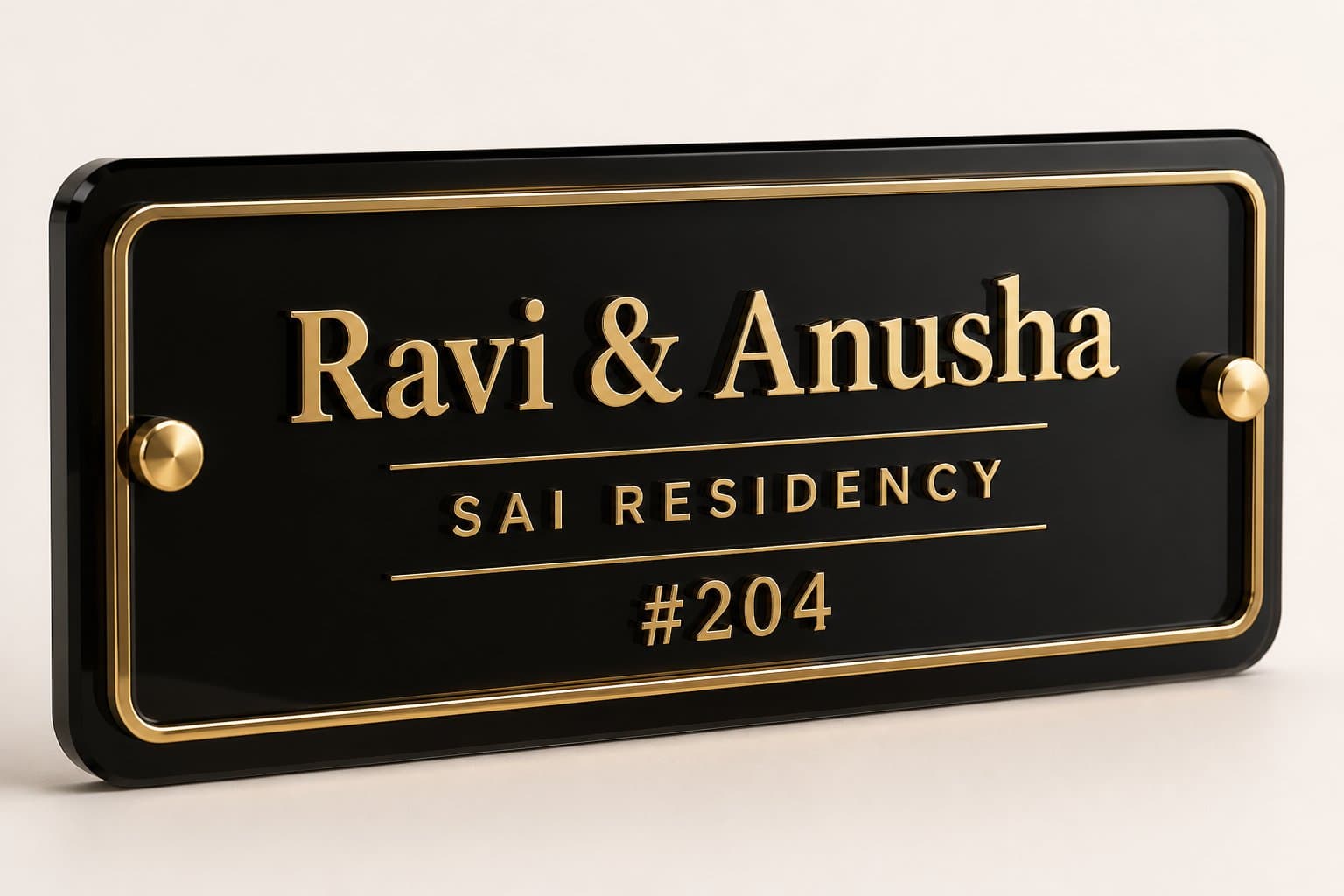
Design inspiration
10 modern nameplate ideas for a considered entrance
From black and gold acrylic to warm wood and bilingual lettering, find a nameplate style that belongs with your door, lighting and architecture.
Material comparison
Acrylic, brass, steel or wood? Choose with confidence
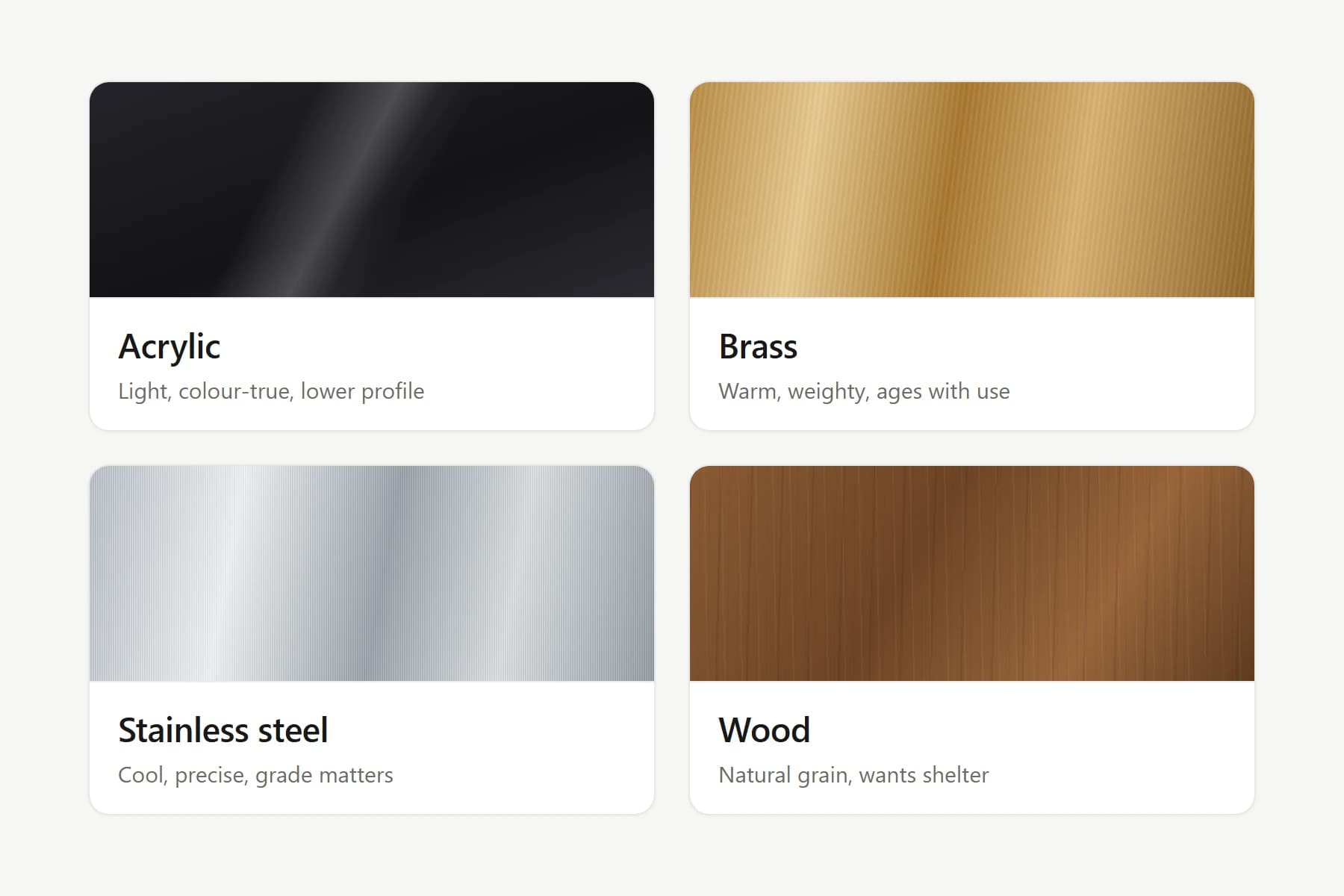
Compare four nameplate materials by appearance, care, exposure and cost, with practical questions to ask before you order.