
The ThresholdMark journal · Material comparison
Acrylic vs Brass vs Stainless Steel vs Wooden Nameplates: Which Is Best?
Compare four nameplate materials by appearance, care, exposure and cost, with practical questions to ask before you order.
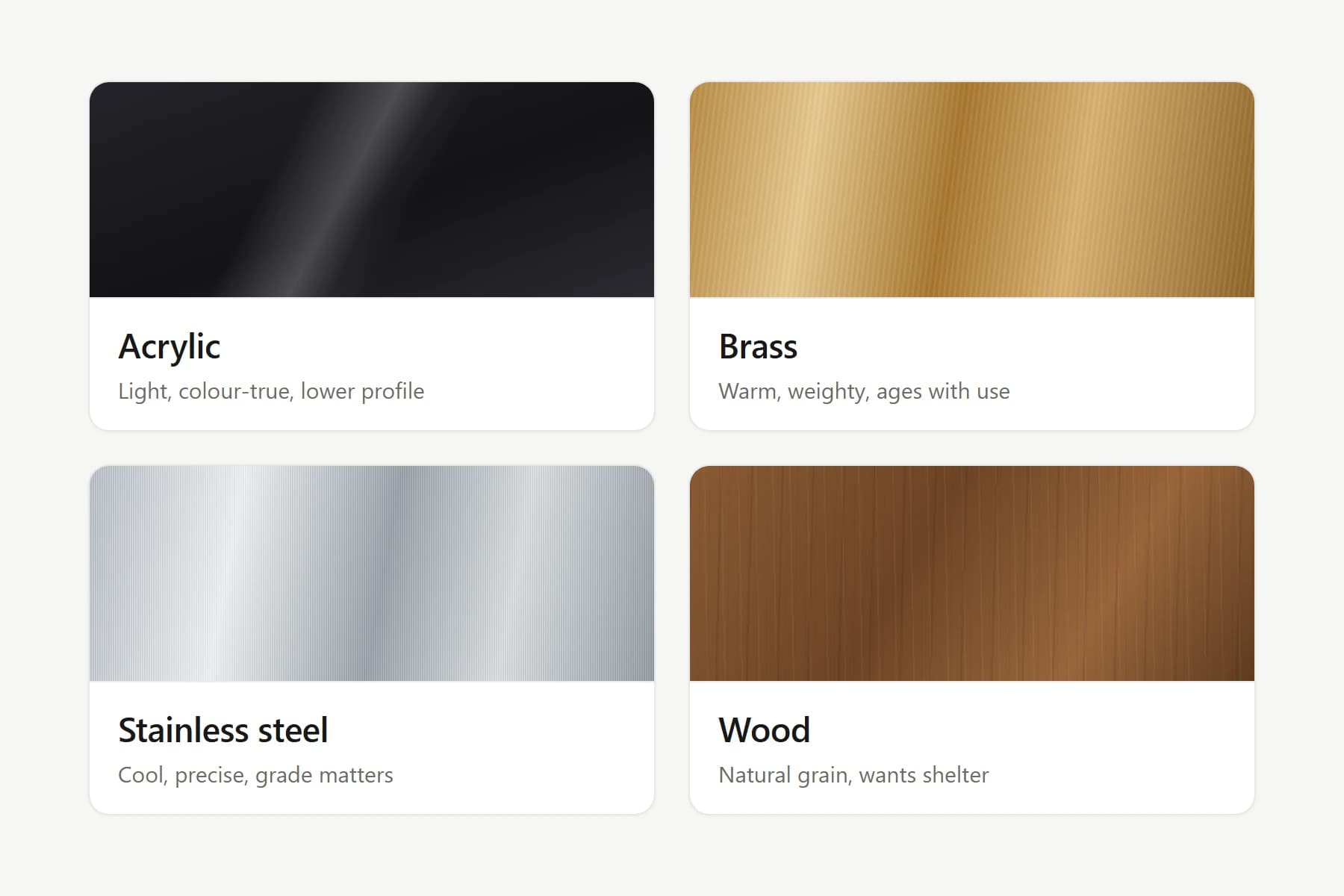
In this guide
There is no single best material for every nameplate. A covered apartment corridor, a rain-facing compound gate and a coastal porch place different demands on the same product. Your preference for a bright finish, natural ageing or minimal upkeep also changes the answer.
Begin with the location, then compare the construction. Material names are useful categories, but they do not tell you everything about the grade, coating, lettering or mounting. This guide separates those decisions so you can choose for your entrance rather than for a photograph alone.
The starting point
Choose for exposure first, appearance second and maintenance third. Confirm the exact material and complete construction; a finish name is not a specification.
The four materials at a glance
Use this comparison to shortlist a direction. The cost descriptions are relative tendencies for comparable designs, not quotations: size, thickness, letter construction, finish and installation can reverse the order.
| Material | Character and weight | Exposure questions | Care | Cost tendency |
|---|---|---|---|---|
| Acrylic | Lightweight; clear, frosted or coloured | Confirm sheet, lettering and adhesive suitability outdoors | Gentle cleaning; protect from scratches | Often accessible; layers and lighting add cost |
| Brass | Warm metal; heavier than acrylic at similar dimensions | Confirm alloy, finish and acceptable ageing | Patina or upkeep of a bright finish | Often a premium choice for solid material |
| Stainless steel | Cool metal; substantial, depending on thickness | Specify grade and finish for the location | Regular cleaning appropriate to exposure | Varies with grade and fabrication |
| Wood | Natural grain; weight varies by species and board | Confirm construction, sealing and shelter | Inspect and renew finish as recommended | Wide range; species and detailing matter |
Acrylic: colour, clarity and a lighter profile
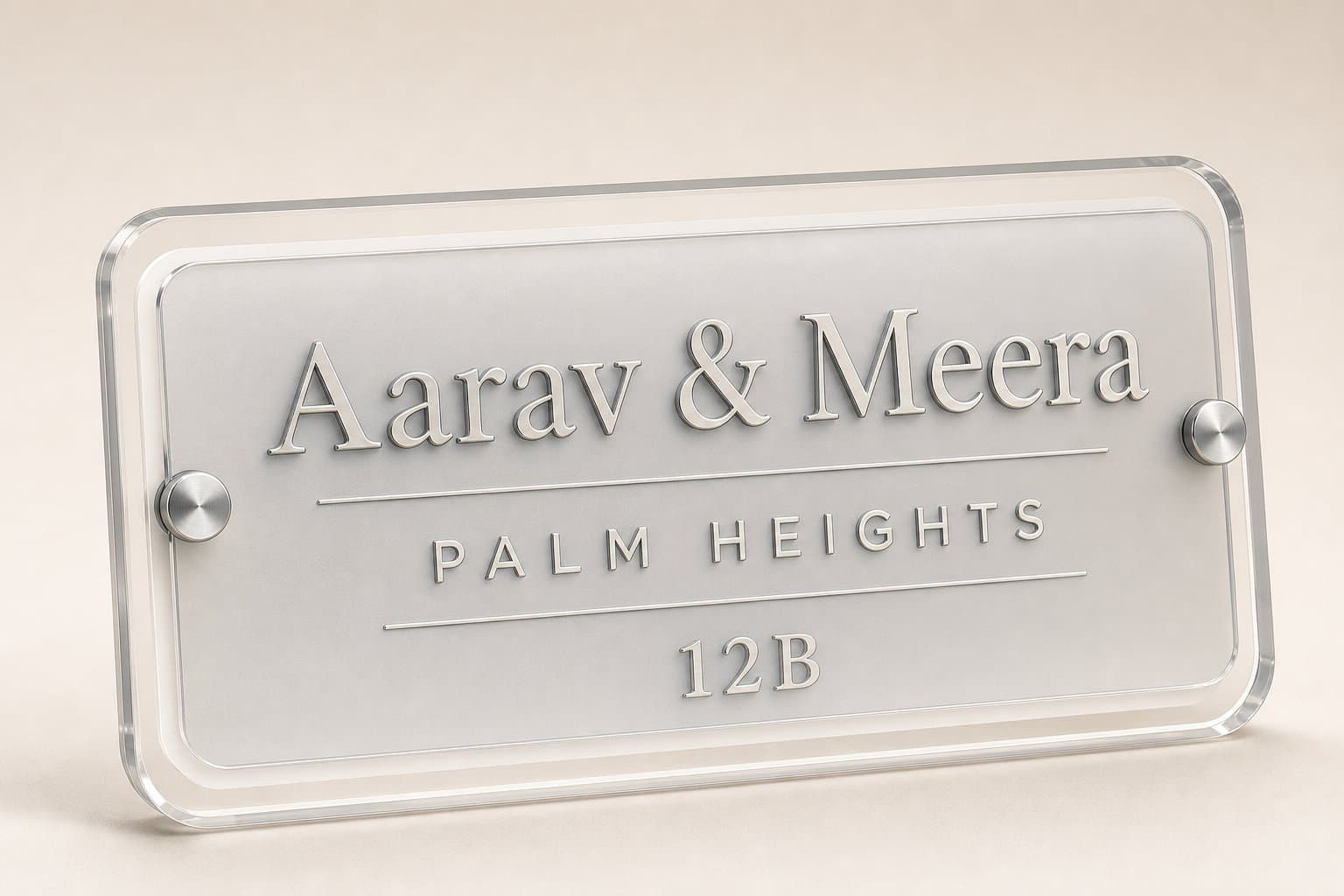
Acrylic is a flexible design choice when you want a clean silhouette, a glossy colour or layered transparency. A simple apartment plate can be visually light, while a contrasting backboard and raised letters create a more substantial appearance. Its lower weight can be useful, although the correct fixing still depends on the wall and the complete assembly.
Do not assume all acrylic must stay indoors, or that every acrylic nameplate is outdoor-ready. Exterior suitability needs to cover the particular sheet colour and grade, the lettering, coatings, adhesives and any electronics. Ask for confirmation for your actual position, especially if it receives prolonged sun or direct rain.
For routine cleaning, follow the finished product's care instructions. Acrylic manufacturer ACRYLITE recommends gentle cleaning with a soft cloth and suitable mild cleaning products, and warns against abrasive cleaners and incompatible solvents. Avoid treating a glossy acrylic surface like a glass window.
A good starting point for a modern apartment entrance when you want a lightweight, clearly composed design. Confirm exposure and care requirements for the selected product.
Further context: ACRYLITE: cleaning and maintaining acrylic sheet
Brass: warmth with a decision about ageing
Brass pairs well with timber doors, traditional architecture and warm metal hardware. It can be understated when brushed and simply lettered, or more decorative when polished and framed. The warm colour is only one part of the choice: the base material and finish determine how the appearance changes over time.
The Copper Development Association describes how brass can develop patina outdoors and how polishing or suitable lacquer can preserve a brighter appearance. Decide which look you want before buying. A living, changing finish and a consistently bright finish involve different expectations for care.
Ask exactly what the word brass describes. Solid brass, brass sheet over a backing and brass-coloured lettering on acrylic are different constructions. Also ask how to clean coated surfaces: an abrasive polish intended for bare metal may be inappropriate for a protective coating.
- Request the base material and thickness in writing.
- Clarify whether natural patina is expected or the finish is protected.
- Follow the care instructions for the actual coating, not just the metal underneath.
Further context: Copper Development Association: introduction to brasses
Stainless steel: specify more than the name
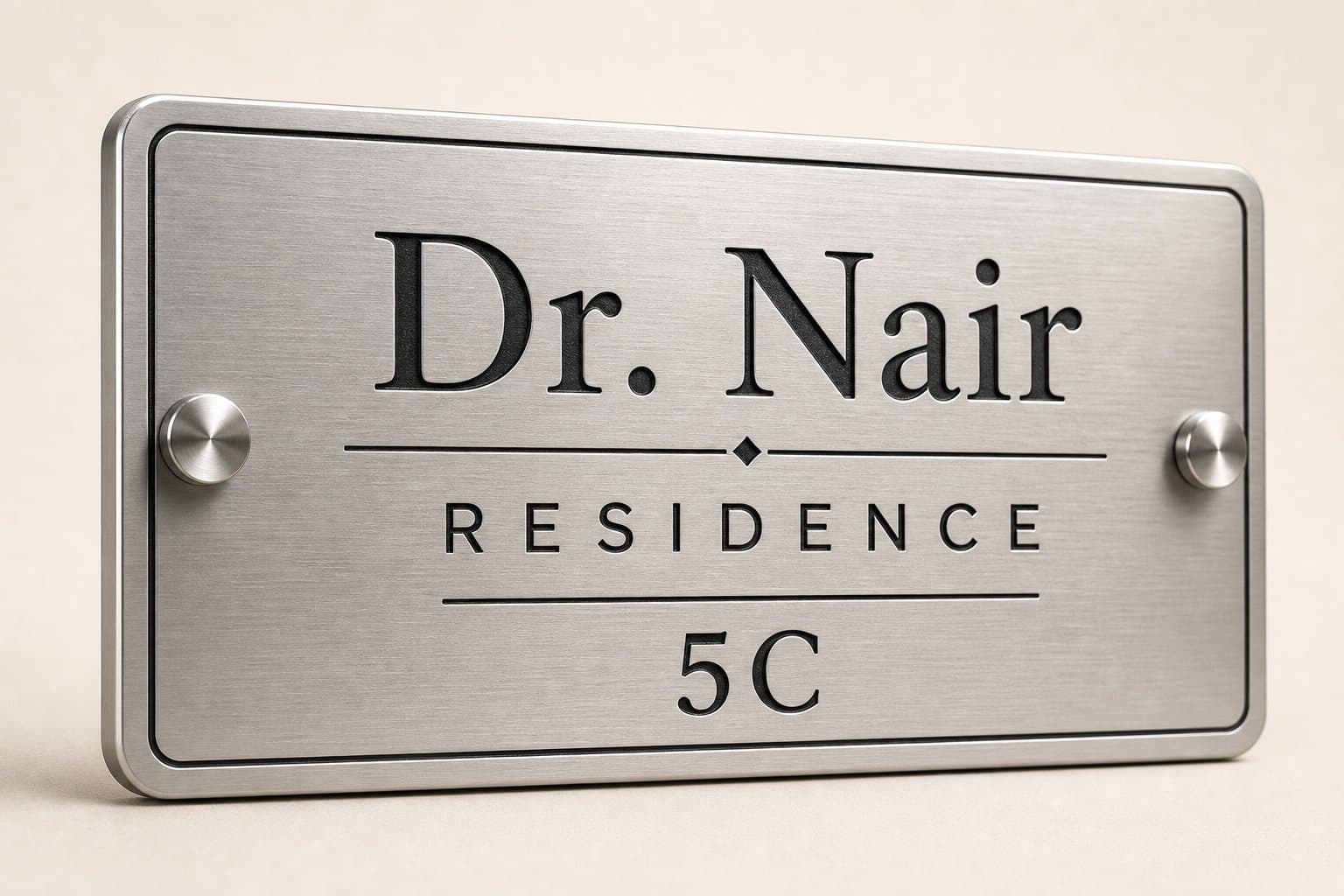
Stainless steel is a strong visual partner for contemporary stone, concrete and silver hardware. A brushed finish can give a quieter reflection; a polished surface brings a more reflective look. Neither finish removes the need to check whether the lettering remains readable under the entrance lighting.
Grade matters, particularly near the coast. World Stainless identifies 316 and related grades as suitable for certain coastal service environments, while also explaining that suitability has limits. That is a reason to ask for a location-specific specification, not to interpret marine grade as a promise of no maintenance in every setting.
Tell the seller if the site is near the sea, exposed to salt spray or sheltered from rain that might otherwise wash deposits away. Ask about the grade of the fixings as well as the plate. Plan access for cleaning and request the maker's maintenance instructions for the chosen finish.
Further context: World Stainless: material selection for marine applications
Wood: natural character and a finish to maintain
Wood offers grain and variation that a flat colour cannot reproduce. It can soften a modern entrance or reinforce the character of a traditional door. The result depends on whether the plate is solid timber, plywood, another engineered board or a wood-look surface, so start by identifying what is actually being supplied.
The US Forest Service's Wood Handbook explains that sunlight, water, wood properties and finish selection all influence outdoor performance. A decorative coating does not make every board suitable for every exposure. Ask how the back, cut edges and fixing holes are treated, and what maintenance the maker expects.
A sheltered position is a practical starting point when choosing wood for its appearance. For an exposed gate, seek a product specifically constructed and finished for that use. Look for clear care guidance instead of accepting a general waterproof claim without an explanation of the complete assembly.
Further context: US Forest Service Wood Handbook: finishing wood
Match the choice to the entrance
In a covered apartment corridor, appearance, readable text and the available wall space often drive the decision. Acrylic can give a clean, light profile; wood can add warmth; either metal can echo the door hardware. Confirm building rules before deciding how the plate will be fixed.
At an exposed gate, move the discussion from style to the full specification. Describe rain, sun, wall material and any irrigation spray. For a coastal home, ask about alloy choice, fixings and cleaning. If you want LED lighting, confirm the protection and service access for the electrical parts as well as the decorative face.
If low upkeep is your main priority, request the actual care schedule for each shortlisted product. Natural patina may reduce the need to preserve a bright metal appearance, but it also changes the look. A cheaper initial plate is not necessarily the better value if maintaining your preferred finish is difficult.
Seven questions worth asking before you order
A clear quotation should let you compare like with like. Share a photograph of the intended position and ask for the following details alongside the design proof.
- What is the base material, grade or species, and thickness?
- Are the letters engraved, printed, raised or attached separately?
- Which coating or surface finish is included?
- Is the complete product suitable for my sun, rain and coastal exposure?
- Which fixings are supplied, and are they appropriate for my wall?
- What cleaning and periodic maintenance are required?
- What do the quoted price, installation arrangement and warranty actually include?
Compare an agreed size and wording across quotes. Otherwise a thicker plate, larger letters or a different mounting system can make the price comparison misleading.
Common questions
Is acrylic always the cheapest choice?
No. A simple acrylic plate may cost less than a comparable solid-metal design, but layers, raised lettering, size and lighting can change the price substantially. Compare complete specifications.
Is a gold-coloured nameplate made of brass?
Not necessarily. The colour can come from brass, a coating, a laminate or another decorative finish. Ask for the base material and lettering material rather than relying on colour.
Which material is best outdoors?
There is no universal answer from the material name alone. The grade, finish, construction, fixings, local exposure and maintenance all matter. Ask the seller to confirm suitability for the actual installation site.
Can I have a wooden appearance without solid wood?
Wood-look finishes exist, but their construction and care requirements differ from real timber. Confirm the underlying material and outdoor suitability of the specific product.
From inspiration to your entrance
Find the finish that belongs at your door
Explore the catalogue, then check the selected design's specification and available options.
Browse materials and designsContinue reading
All guides →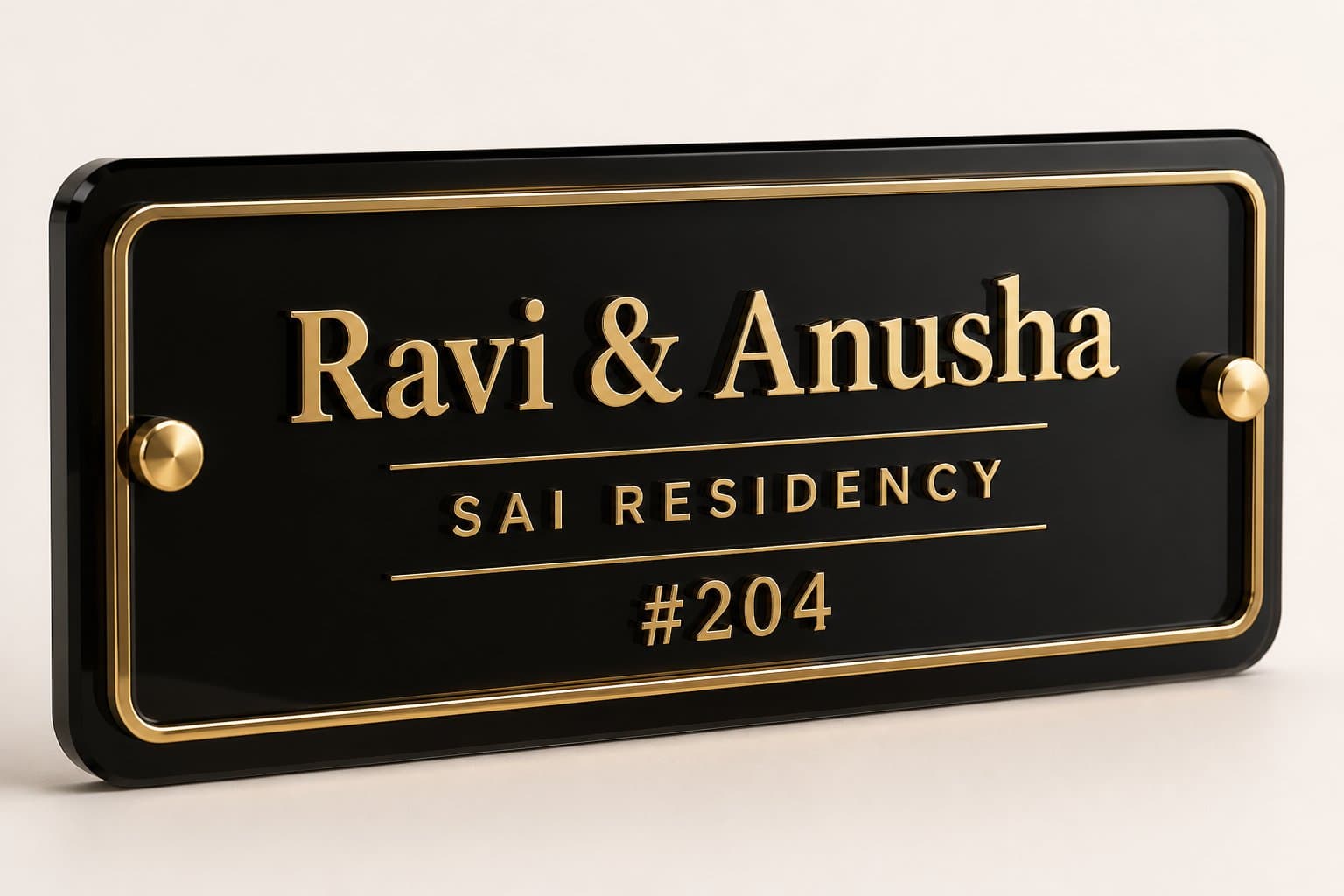
Design inspiration
10 modern nameplate ideas for a considered entrance
From black and gold acrylic to warm wood and bilingual lettering, find a nameplate style that belongs with your door, lighting and architecture.
Vastu & tradition
A thoughtful approach to Vastu and your nameplate
Explore traditional nameplate preferences alongside practical advice on placement, colour, lighting and clear lettering for Indian homes.